Yonsei Kim & Lee Dermatology Doctor's Column
Dermatology Column

Does the 7 Skin Method Really Lead to Dewy, Glowing Skin?

How the 7 skin method of layering toner to replenish moisture is done, what it can do, and what each skin type should watch for.

Published 2026-10-23 Updated 2026-10-23 Reviewed by Taehyung Kim, Medical Director · Dermatology Specialist

The 7 skin method, in which toner is layered several times to replenish moisture, is a home care routine that can help improve dehydration beneath the skin's surface when practised steadily. That said, seven times is not the right answer for everyone, and the number of layers should be adjusted to the skin type.

This column sets out what the 7 skin method is, the order in which it is done, its effects, and how to adapt it to different skin types and to the change of seasons.

01

What is the 7 skin method?

Key point
The 7 skin method is a home care routine in which toner is applied after cleansing not once but in several thin layers, up to seven times, to replenish moisture within the skin. The key is to build thin layers that absorb well rather than applying a large amount at once.

The 7 skin method means repeating one process: straight after cleansing, toner is poured onto the hands or a cotton pad, spread over the whole face and patted in lightly until absorbed. It starts from the principle that a small amount built up in several layers carries moisture deeper into the skin.

As the name suggests, 7 layers is the standard, but there is no need to complete them all. Depending on the skin type, reducing to around 3 to 5 layers is sometimes more appropriate, so learning to sense when the toner has been fully absorbed matters more than a fixed number.
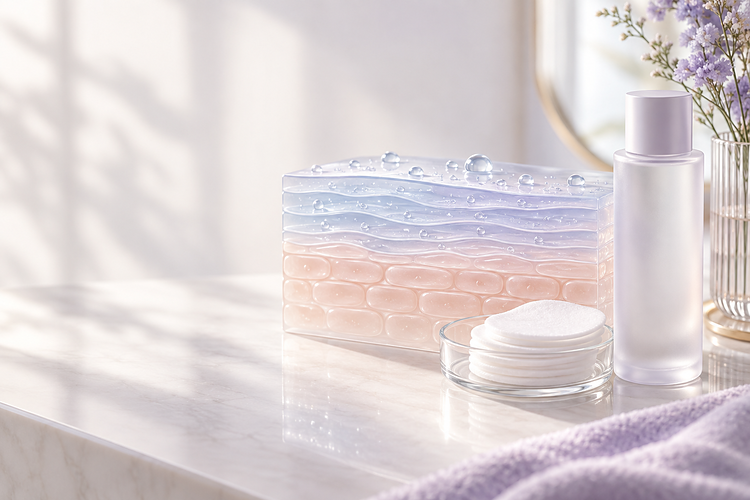
Anatomy illustration related to Does the 7 Skin Method Really Lead to Dewy, Glowing Skin?
02

In what order is the 7 skin method done?

Key point
The routine has four steps: preparing the toner after cleansing, applying it, letting it absorb and repeating this several times, and then finishing with an essence or cream. Following the steps in order is what allows moisture to build up properly in the skin.

First, after cleansing, the water left on the face is lightly blotted away and a generous supply of a hydrating toner containing hyaluronic acid is prepared. A small amount at a time is then poured onto the hands or a cotton pad, spread over the whole face and patted in lightly with the palms, and this motion is repeated.

The process continues through the second and third layers up to the seventh, checking each time that the previous layer has been fully absorbed before slowly adding the next. At the end, an essence or cream is applied on top so that the moisture built up beforehand does not evaporate.

  • Toner preparation after cleansing — lightly blot away water and prepare a toner containing hyaluronic acid
  • Toner layer 1 — spread with the hands or a cotton pad, then pat gently until absorbed
  • Layers 2 to 7 — layer the toner in the same way, letting each coat absorb
  • Finishing step — cover with an essence or cream to hold the moisture in
03

What effects does the 7 skin method have?

Key point
When toner is absorbed in several layers, moisture can reach deeper into the skin, which helps improve dehydration beneath the surface. As sensitised skin calms down, redness may ease and the balance of oil may also be regulated, so these effects can reasonably be expected with steady use.

When the same product is absorbed in several layers, moisture has time to seep gradually not just into the surface of the skin but into the layer beneath it. For that reason, the more steadily the routine is repeated, the more often people notice less of the tightness felt straight after cleansing and fewer loose, flaky patches.

As dehydration beneath the surface improves, sensitised skin gradually calms and its texture becomes smoother as well. This is because well-hydrated skin reacts less sensitively to outside irritation; redness lessens, the skin's oil finds its balance, and its ability to hold moisture rises with it.

  • Improved inner dehydration — layers of toner build up and carry moisture deep into the skin
  • Smoother texture and calming — sensitive, reactive skin settles and its texture softens
  • Less redness — the skin reacts less to irritation, so flushing subsides
04

What should be done differently by skin type and season?

Key point
Sensitive or oily skin is safer with 3 to 5 layers instead of 7, absorbed with the hands rather than a cotton pad. In the change of seasons, when the skin's oil supply falls, an ampoule and lotion should be added after the toner to keep the barrier from thinning.

Adjusting to the skin type matters more than a fixed number. For sensitive or oily skin, reducing from seven layers to between three and five and patting the toner in with the hands lowers irritation. Products based on hyaluronic acid are preferable to toners that contain alcohol.

In the change of seasons, when the daily temperature range is wide and humidity drops, the sebaceous and sweat glands become less active and the supply of oil falls, so care that only adds moisture has its limits. A heavier ampoule should replace the serum and a lotion step should be added; if replenishing oil is neglected, the barrier can become thinner still.

  • Sensitive or oily skin — reduce from 7 layers to 3 to 5, and absorb with the hands instead of a cotton pad
  • Check the ingredients — avoid toners containing alcohol and choose products based on hyaluronic acid
  • Seasonal support — add an ampoule and lotion after the toner so that oil is replenished as well
Doctor's view

How the doctor decides

Taehyung Kim, Medical Director · Dermatology Specialist

I check the skin type first

I do not recommend the 7 skin method as it stands just because someone tells me their skin lacks moisture. Even with the same dryness, the right number of layers differs depending on whether the skin is oily or sensitive and thin, so I check the skin type first; only then can I tell whether to follow all 7 layers or reduce to 3 to 5.

I look at moisture and oil together

I believe that even if toner is layered many times, the barrier can become thinner if an oil film is not added afterwards. So I first check whether a step with some oil content, such as an ampoule or lotion, has been skipped after the hydrating step.

I review the order again with the season

I do not tell patients to keep their usual basic routine unchanged in the change of seasons. At a time when the sebaceous and sweat glands are less active, I first consider whether switching from a serum to a heavier ampoule and adding a lotion step is the right move, and then I adjust the order.

I do not miss signs of irritation

I start by checking for sources of irritation, such as a habit of rubbing with a cotton pad or a toner that contains alcohol. If redness or tightness continues, I do not tell the patient to add more layers; I advise reducing them first.

Summary

In summary

The 7 skin method is a home care routine that replenishes moisture by applying toner in several layers, and practised steadily it can help improve dehydration beneath the skin's surface. The number of layers should be adjusted to the skin type and the season, and if tightness or redness continues, it is advisable to see a dermatologist.

FAQ

Frequently asked questions

QDoes the 7 skin method need to be done every day?
A

There is no set frequency, and using it mainly on dry days is enough. It can be adjusted while watching how the skin reacts to irritation.

QIs it fine to apply toner with the hands only, without a cotton pad?
A

Yes. A cotton pad can cause friction and irritation, so patting the toner in with the hands is the safer option.

QIs there no effect if all 7 layers are not completed?
A

That is not the case. Seven is only a guideline, and for sensitive or oily skin 3 to 5 layers are often enough.

QIs the 7 skin method alone enough in the change of seasons?
A

It may not be enough. Oil also decreases in the change of seasons, so ampoule and lotion steps should be added.

Medical review
Taehyung Kim, Medical Director · Dermatology Specialist
This content is general medical information and may not apply to every individual. Diagnosis and treatment are decided through a consultation.